Illinois’ Secret Treasures: 10 Extraordinary Places Most Tourists Miss
Beyond Chicago’s iconic skyline and the well-trodden paths of Route 66 lies a different Illinois – one of ancient civilizations, breathtaking natural wonders, and cultural gems that remain surprisingly under the radar. The Prairie State harbors extraordinary destinations that reveal its rich tapestry of history, diverse landscapes, and cultural significance. These hidden treasures offer authentic experiences for travelers willing to venture beyond the obvious attractions and discover the soul of Illinois.
In Brief
- Illinois features ancient Native American sites predating European settlements by centuries
- The state boasts unexpected natural wonders including canyons, waterfalls, and rock formations
- Historic towns and reconstructed villages offer immersive glimpses into Illinois’ past
- World-class Japanese gardens and unique sculpture parks showcase artistic excellence
- Southern Illinois contains swamplands with trees over 1,000 years old
[toc]
Ancient wonders at Cahokia: America’s forgotten metropolis
Just across from St. Louis stands what was once the largest pre-Columbian settlement north of Mexico. Cahokia Mounds State Historic Site represents the remains of a sophisticated Native American civilization that flourished between 900-1400 CE, yet remains remarkably unknown to many Americans. The site features over 80 earthen mounds constructed by the Mississippian culture, with Monks Mound rising an impressive 100 feet high and covering 14 acres – making it the largest prehistoric earthen construction in the Americas.
This UNESCO World Heritage Site once supported a population of 10,000-20,000 people in a complex urban center with astronomical observatories, plazas, and residential areas. The interpretive center houses artifacts revealing their advanced society, including intricate ceramics, copper works, and evidence of long-distance trade networks. Walking these grounds provides a profound connection to an American civilization that predates European arrival by centuries.
Rock formations that defy imagination: Garden of the Gods
Tucked away in the Shawnee National Forest of southern Illinois, the aptly named Garden of the Gods showcases some of the most spectacular rock formations in the Midwest. These towering sandstone structures, sculpted over 320 million years by wind and water erosion, create an otherworldly landscape that feels transported from the American Southwest.
The primary observation trail spans a quarter-mile of wheelchair-accessible boardwalk offering panoramic views of the dramatic bluffs, hoodoos, and balanced rocks with names like Camel Rock, Anvil Rock, and Devil’s Smokestack. For more adventurous hikers, the surrounding wilderness area contains over 5.5 miles of interconnected trails through dense forest and striking geological features. Fall visitors are rewarded with a spectacular display of autumn colors spreading across the rolling hills below.
Nature’s artistic masterpiece: Starved Rock’s hidden canyons
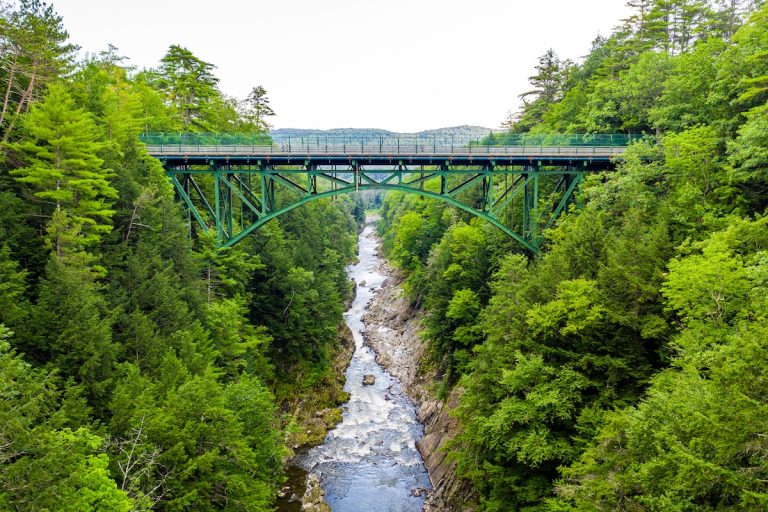
Just 90 minutes from Chicago, Starved Rock State Park contradicts every stereotype about Illinois being flat and featureless. This natural wonderland encompasses 18 glacier-carved canyons with vertical walls of stratified sandstone, seasonal waterfalls, and over 13 miles of well-maintained hiking trails.
Unlike anything else in the Midwest, canyons like St. Louis, French, and Wildcat create intimate spaces where moss-covered walls rise 80 feet above crystal streams and plunging waterfalls. Winter transforms the park as frozen waterfalls create massive ice columns drawing ice climbers from across the region. The park’s historic lodge, built in the 1930s by the Civilian Conservation Corps, offers rustic-luxury accommodations with a massive stone fireplace perfect for warming up after a day of exploration.
Related Posts:


Tranquility perfected: Anderson’s immersive Japanese sanctuary
In an unexpected location – Rockford, Illinois – lies one of North America’s premier Japanese gardens. Anderson Japanese Gardens represents the culmination of businessman John Anderson’s passion project, developed over decades with the guidance of renowned Japanese landscape designer Hoichi Kurisu.
These 12 acres embody the principles of Japanese garden design: careful composition, attention to detail, and the subtle balance between natural and human elements. Winding paths reveal meticulously pruned maples, authentic tea houses, koi-filled streams, and cascading waterfalls arranged to create moments of discovery and contemplation. Unlike gardens that merely incorporate Japanese elements, Anderson’s achieves cultural authenticity through its adherence to traditional design principles and careful maintenance techniques.
Good to Know
The Anderson Japanese Gardens hosts special cultural events throughout the year, including:
- Tuesday Evening in the Gardens – Summer concert series featuring diverse musical performances
- Japanese Summer Festival – Demonstrations of traditional arts like tea ceremony, ikebana, and taiko drumming
- Autumn Japanese Cultural Festival – Celebrating the spectacular fall colors with cultural activities
- Winter Illumination – Special evening hours with the gardens beautifully lit
Check their website for specific dates before planning your visit, as these events often sell out quickly.
Galena: the town that time forgot
Nestled among rolling hills in Illinois’ northwest corner, Galena feels more like a New England village than a Midwestern town. This remarkably preserved 19th-century community once outrivaled Chicago as Illinois’ commercial center due to lead mining and Mississippi River trade.
Today, over 85% of Galena’s buildings are listed on the National Register of Historic Places, creating an architectural time capsule of brick Italianate, Federal, and Greek Revival structures. Main Street stretches for six charming blocks of independent boutiques, galleries, and restaurants housed in buildings that have stood since before the Civil War. Notable sites include the Ulysses S. Grant Home, preserved exactly as it was when presented to the future president upon his triumphant return from the Civil War, and the DeSoto House Hotel, Illinois’ oldest operating hotel where Abraham Lincoln once addressed crowds from its balcony.
Art meets nature: Allerton’s unexpected sculpture garden
Allerton Park & Retreat Center near Monticello represents one man’s eccentric vision brought to life. Robert Allerton, heir to a Chicago banking fortune, transformed his estate into a European-inspired landscape featuring formal gardens punctuated with unexpected sculptural elements.
The 1,500-acre property contains a 40-room Georgian mansion surrounded by themed gardens including the spectacular Fu Dog Garden lined with 22 blue ceramic Chinese dogs, the Sunken Garden with its neoclassical sculptures, and the surreal Avenue of the Chinese Musicians where massive stone figures stand sentinel among towering pines. Miles of woodland trails connect these formal spaces to natural areas along the Sangamon River. The estate now belongs to the University of Illinois, which maintains it as a public park and event venue while preserving Allerton’s unique artistic vision.
Primeval swamplands: Cache River’s ancient cypress kingdom
In Illinois’ southernmost reaches lies an ecosystem more reminiscent of Louisiana than the Midwest. The Cache River State Natural Area protects over 14,000 acres of cypress-tupelo swamps, bottomland hardwood forests, and some of the oldest trees east of the Mississippi.
The star attraction is the State Champion Bald Cypress, locally known as the “Old Grandfather,” measuring over 40 feet in circumference and estimated to be 1,200 years old. Explorers can navigate wooden boardwalks penetrating deep into these primeval wetlands or take canoe trails through the flooded timber where massive cypress knees rise from tannin-stained waters. Lucky visitors might spot river otters, swamp rabbits, or the elusive southern bird species that reach the northern limits of their range here.
Lincoln before fame: New Salem’s living history experience
Before becoming America’s 16th president, Abraham Lincoln spent his formative young adult years in a small frontier settlement on the Sangamon River. Lincoln’s New Salem recreates this 1830s village with meticulous historical accuracy through 23 reconstructed log buildings on their original foundations.
Unlike many historical sites, New Salem brings the past vividly to life through costumed interpreters practicing period crafts and trades – blacksmithing, candle making, wool spinning – using authentic tools and techniques. Visitors can step into the general store where Lincoln worked, see the debating society where he honed his oratorical skills, and understand how these humble beginnings shaped his character. The site offers unique seasonal events including harvest festivals, military musters, and candlelight tours that provide immersive glimpses into 19th-century prairie life.
Black Hawk’s legacy: sacred landscapes and painful history
Overlooking the Mississippi River in Rock Island, Black Hawk State Historic Site preserves 208 acres of forest along territory once inhabited by the Sauk and Meskwaki peoples. This land holds profound significance as part of the homeland defended by Chief Black Hawk during the tragic 1832 conflict that bears his name.
Beyond its natural beauty featuring mature woodlands, limestone bluffs, and abundant wildlife, the site houses the Hauberg Indian Museum displaying artifacts from the Sauk and Meskwaki cultures that flourished here for generations. Exhibits thoughtfully present both indigenous perspectives and the complex history of cultural displacement. The CCC-constructed lodge building offers educational programs exploring Native American heritage and ethnobotany using plants found along the park’s network of interpretive trails.
Matthiessen’s hidden ravines: the locals’ alternative to Starved Rock
Just a few miles from its more famous neighbor lies Matthiessen State Park, offering equally stunning geological features but with significantly smaller crowds. The park’s centerpiece is a mile-long canyon carved through sandstone by the Vermilion River, creating dramatic dells, rock shelters, and seasonal waterfalls.
Two distinct sections – the Upper Dell and Lower Dell – are connected by a series of staircases and bridges allowing visitors to experience the canyon from multiple perspectives. The park’s five miles of well-maintained trails traverse diverse habitats including prairie restoration areas, upland forests, and stream corridors. For adventurous visitors, the stream bed itself becomes a trail during dry periods, allowing exploration deep into narrow slot canyons where sunlight filters through the dense canopy above.
Tips for exploring Illinois’ hidden gems
- Timing matters – Visit waterfalls at Starved Rock and Matthiessen in spring or after heavy rains
- Seasonal beauty – Galena and Garden of the Gods showcase spectacular fall colors in mid-October
- Water exploration – Rent canoes for Cache River from outfitters in Ullin for the best cypress swamp access
- Photography planning – Morning light best captures Cahokia Mounds; sunset illuminates Garden of the Gods’ rock formations
- Accommodations strategy – Book Starved Rock Lodge at least 6 months in advance for weekend stays
- Event coordination – Check event calendars for Lincoln’s New Salem to coincide with living history demonstrations
Beyond the expected: Illinois redefined
These ten destinations only scratch the surface of Illinois’ hidden treasures. The state rewards curious travelers who venture beyond its metropolitan centers to discover ancient civilizations, geological wonders, artistic visions, and preserved slices of American history. From the cypress swamps of its southern tip to the rolling hills of its northwestern corner, Illinois contains multitudes that defy easy categorization.
The next time your travels take you through the heartland, consider detouring from the interstate to explore these remarkable places. You’ll find landscapes that challenge your preconceptions, history that deepens your understanding of America’s story, and natural beauty that rivals more famous destinations – all without the crowds. These hidden gems of Illinois await your discovery, promising experiences that remain authentic, profound, and surprisingly accessible.
| Destination | Location | Best Season | Main Attraction |
|---|---|---|---|
| Cahokia Mounds | Collinsville | Spring/Fall | Pre-Columbian Native American city |
| Garden of the Gods | Shawnee National Forest | Fall | Dramatic rock formations |
| Starved Rock | Oglesby | Spring/Winter | Canyons and waterfalls |
| Anderson Japanese Gardens | Rockford | Late Spring/Early Fall | Authentic Japanese landscape design |
| Galena | Northwest Illinois | Fall | Preserved 19th-century architecture |
| Allerton Park | Monticello | Spring/Summer | Formal gardens and sculptures |
| Cache River | Southern Illinois | Fall/Spring | Ancient cypress trees and swamps |
| Lincoln’s New Salem | Petersburg | Summer | Reconstructed 1830s village |
| Black Hawk Site | Rock Island | Summer | Native American history and natural areas |
| Matthiessen State Park | Oglesby | Spring/Fall | Less crowded canyons and waterfalls |